Skip to content
post-thumb

Have You Seen These Underwater Bubbles?

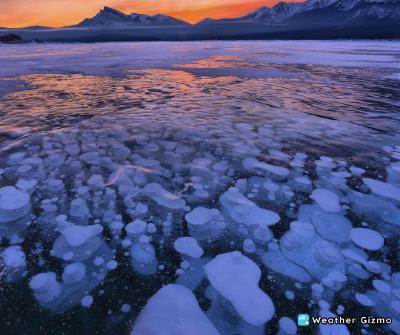
Icy underwater bubbles are one of the most curious natural phenomena. In the Canadian province of Alberta, there is Lake Abraham, which is known among scientists and nature lovers because of an unusual phenomenon: a large number of ice bubbles that have frozen under water. These fantastic circles are actually made up of methane bubbles.

Read more...
post-thumb

Quadrantid Meteor Shower Guide

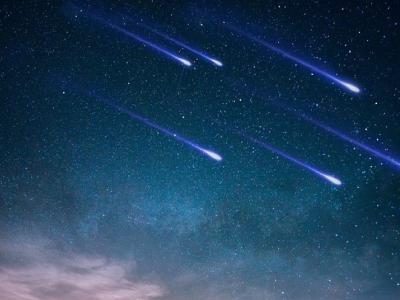
The first big celestial event of the year arrives quickly: the Quadrantid meteor shower peaks during the night of 3–4 January. This shower is famous for producing brief outbursts of more than 100 fast, blue meteors per hour, but only for a few hours when Earth slices through the densest part of the debris stream.

Read more...
post-thumb

What’s the difference between glaze ice (from freezing rain) and black ice?

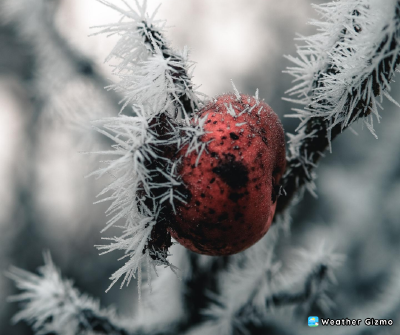
In winter forecasts you may hear two very similar-sounding terms. In Russian they’re «гололёд» and «гололедица» — and they describe different kinds of ice. Glaze ice (ice on objects) This is ice that coats objects: tree branches, power lines, roofs, railings, cars. It most often forms during freezing rain/drizzle when the air temperature is around 0 °C (or slightly below) and supercooled droplets freeze immediately on contact, creating a smooth, glassy layer.

Read more...
post-thumb

Ursids: The Year’s Final Meteor Surprise

If you still crave meteors after the Geminids, keep your gear handy for the Ursids. This faithful shower peaks on the night of 22 December, just after the solstice, delivering roughly 10 meteors per hour with occasional outbursts when Earth crosses dense filaments shed by Comet 8P/Tuttle. The radiant sits near the Little Dipper’s bowl in Ursa Minor, so it never sets for most Northern Hemisphere observers.

Read more...
post-thumb

Geminids: December’s Meteor Main Event

Clear a spot on your calendar for the Geminid meteor shower, widely regarded as the most reliable display of the year. Activity stretches from 4 to 17 December, and the peak is predicted for the night of 13–14 December with zenithal hourly rates near 120 meteors per hour under dark skies.

Read more...
post-thumb

Leonid Meteor Shower

The Leonid Meteor Shower is an annual celestial event awaited by stargazers. The Leonid Meteor Shower is named after the constellation Leo, from where the meteors appear to emanate. It occurs when Earth crosses the debris trail left by comet 55P/Tempel-Tuttle. This event is known for its bright meteors and persistent trails left in the sky, providing a spectacular view for observers​.

Read more...
post-thumb

Meteorological vs Astronomical Winter - What's the Difference?

While many associate the winter season with cold weather, snowy landscapes and the holiday season, there is more than one way to define the beginning and end of winter. Meteorologists and astronomers use two different systems to delineate the seasons - meteorological winter and astronomical winter. Let’s explore the key differences between these two definitions of winter.

Read more...
post-thumb

How is Storm Naming in Europe Different from the USA?

Europe: History & System: The practice of naming storms in Europe is relatively recent compared to the USA. It began in the 1950s for the North Atlantic storms and was more widely adopted in the 21st century. Various national meteorological agencies across Europe are responsible for naming storms. For instance, the UK’s Met Office, Ireland’s Met Éireann, and the Netherlands' Royal Netherlands Meteorological Institute collaborate to name storms that impact their regions.

Read more...